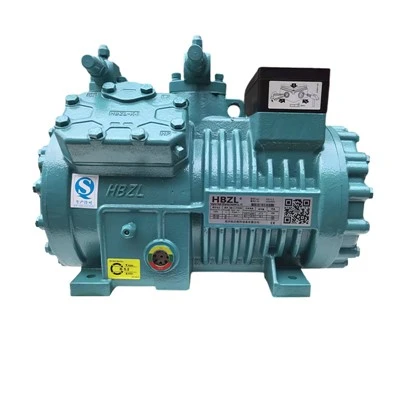
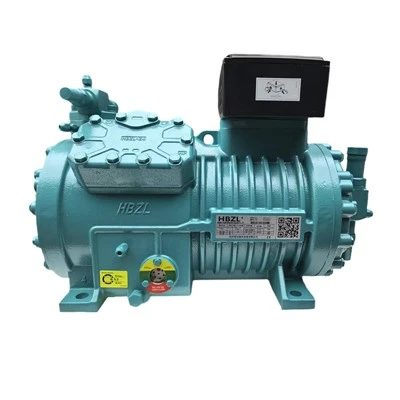
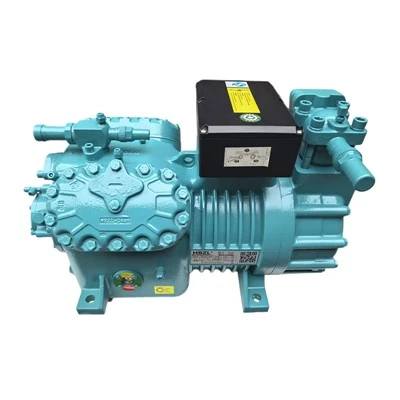
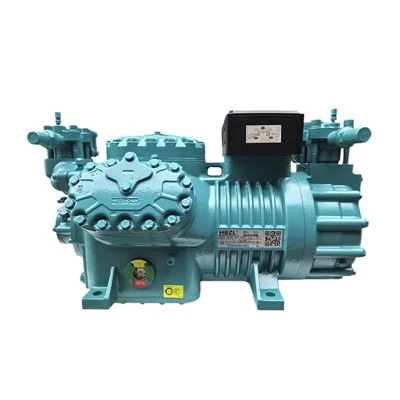
Screw compressor units are core equipment widely used in refrigeration, air conditioning, and industrial cooling. Their working principle is based on the efficient compression process of a screw compressor, combined with a refrigeration cycle system to achieve heat transfer and control. The core of a screw compressor unit is a twin-screw compressor, consisting of a pair of meshing male rotors (driving) and female rotors (driven). The rotor surfaces have helical toothed grooves. A motor drives the male rotor to rotate, causing the female rotor to rotate synchronously in the opposite direction. Within the compression chamber, the volume between the toothed grooves gradually decreases as the rotors rotate, achieving the intake, compression, and discharge of refrigerant gas.
Continuous Compression: Unlike the intermittent compression of reciprocating compressors, screw compressors achieve pulsation-free gas compression through continuous rotor rotation, resulting in smoother operation and less vibration.
High Volumetric Efficiency: The precise design of the rotor toothed grooves (such as asymmetrical profiles) reduces gas leakage, achieving a volumetric efficiency of over 90%, significantly reducing energy consumption.
Highly adaptable: The internal volume ratio can be steplessly adjusted by adjusting the position of the slide valve to adapt to different working conditions, while also supporting partial load operation, resulting in significant energy-saving effects.