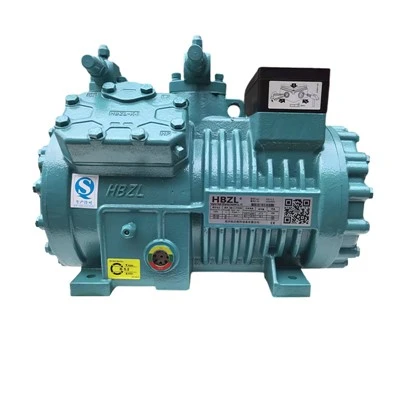
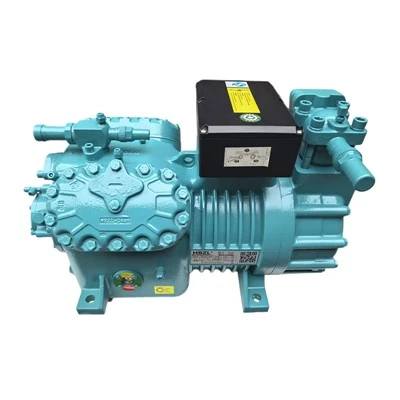
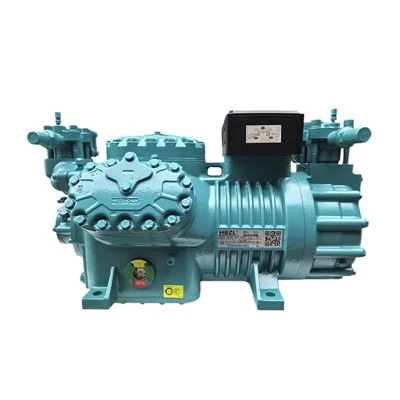
Zhejiang Xuanyuntong Refrigeration Technology Co., Ltd. is one of the most reliable manufacturers and suppliers of reciprocating compressor in China, also supports custom service. Welcome to wholesale high quality reciprocating compressor at competitive price from our factory.
The reciprocating compressor is mainly composed of a compression system, a transmission system, a power system and an auxiliary system. The core components include cylinder, piston, air valve, crankshaft, connecting rod, etc. It has a mature structural design, convenient processing and relatively low cost. It has the advantages of high thermal efficiency, low unit power consumption and wide compression ratio range. The single-stage compression ratio can reach 3-8, and the multi-stage compression ratio can exceed 100, which can adapt to the gas compression needs from normal pressure to ultra-high pressure.
The reciprocating compressor application scenarios cover many industries such as machinery manufacturing, chemical metallurgy, food processing, aerospace, etc., and it can handle various media such as air, hydrogen and refrigerant. At the same time, the equipment also has limitations such as many moving parts, large maintenance workload and high operating noise. At present, through technological iteration, significant improvements have been made in noise reduction, energy consumption optimization and intelligent control, adapting to a wider range of industrial working conditions.
| Model | Nominal Power HP/KW | Mechanical Parameters | Electrical Parameters | Take over | Crankcase Heater (220V) | Install Base Feet | Overall Dimensions | R Refrigeration Oil | Net Weight (kg) | Energy Adjustment % | ||||||||||
| Number of cylinders | 1450 rpm Displacement (m³/h) | Maximum Operating Current (A) | Maximum Power Consumption (kW) | Starting Current (A) | Exhaust pipe | Intake pipe | Bottom Corner Hole Dimensions | Bottom Corner Mounting Dimensions | Length ( A ) | Width (B) | High (C) | Oil Filling Volume | Grade | |||||||
| Millimeter | inch | Millimeter | inch | |||||||||||||||||
| Medium 4-Cylinder Compressor Voltage: 380–420V/3YY Frequency: 50Hz | ||||||||||||||||||||
| HB4YG-8.2 | 6.0/4.5 | 4 | 34.7 | 14 | 8.1 | 68 | 22 | 1 1/8 | 28 | 1 1/8 | 120 | 15 | 367×256 | 631 | 306 | 385 | 2.6 | For HFC refrigerants, Suniso 3GS polyester oil is used. | 132 | 50 |
| HB4YG-10.2 | 10.0/7.4 | 4 | 34.7 | 21 | 11.3 | 99 | 22 | 1 1/8 | 28 | 1 1/8 | 120 | 15 | 367×256 | 631 | 306 | 385 | 2.6 | 141 | 50 | |
| HB4YD-8.2 | 8.0/6.3(5.5) | 4 | 41.5 | 17 | 9.4 | 82 | 28 | 1 1/8 | 35 | 1 3/8 | 120 | 15 | 367×256 | 631 | 306 | 385 | 2.6 | 138 | 50 | |
| HB4YG-12.2 | 12.0/9.3 | 4 | 41.5 | 24 | 13.9 | 114 | 28 | 1 1/8 | 35 | 1 3/8 | 120 | 15 | 367×256 | 631 | 306 | 385 | 2.6 | 146 | 50 | |
| HB4YD-10.2 | 10.0/7.4 | 4 | 48.5 | 21 | 11.8 | 99 | 28 | 1 1/8 | 35 | 1 3/8 | 120 | 15 | 367×256 | 631 | 306 | 385 | 2.6 | 142 | 50 | |
| HB4YG-15.2 | 15.0/11.0 | 4 | 48.5 | 31 | 16.3 | 133 | 28 | 1 1/8 | 42 | 1 5/8 | 120 | 15 | 367×256 | 652 | 306 | 385 | 2.6 | 151 | 50 | |
| HB4YD-12.2 | 12.0/9.3 | 4 | 56.2 | 24 | 14.2 | 113 | 28 | 1 1/8 | 35 | 1 3/8 | 120 | 15 | 367×256 | 631 | 306 | 385 | 2.6 | 144 | 50 | |
| HB4YG-20.2 | 20.0/15.0 | 4 | 56.2 | 37 | 19.5 | 159 | 28 | 1 1/8 | 42 | 1 5/8 | 120 | 15 | 367×256 | 652 | 306 | 385 | 2.6 | 153 | 50 | |
| Note: The crankshaft heater is an optional accessory. | ||||||||||||||||||||
| The energy regulation device is an optional accessory. Rated Voltage: 220V/50Hz. | ||||||||||||||||||||
| Starting Method: Split-winding start. Y/D (Wye-Delta) motors or other motor types can be provided upon request. | ||||||||||||||||||||
| Refrigerants: Our equipment utilizes HFC refrigerants, primarily R22. It is also compatible with refrigerants such as R134a, R404a, R507a, and R4407c. | ||||||||||||||||||||
Hot Tags: reciprocating compressor, China reciprocating compressor manufacturers, suppliers, factory, Cooler Compressor, Marine Refrigeration Compressor, Open Type Compressor, Recip Compressor, Single Stage Double Acting Reciprocating Air Compressor, Single Stage Reciprocating Compressor