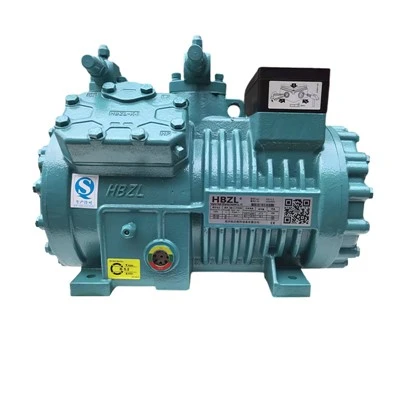
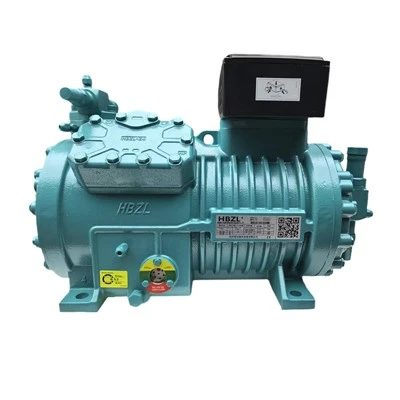
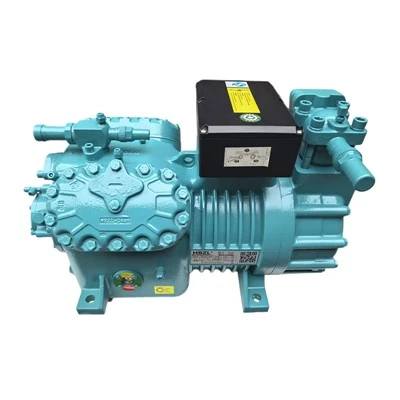
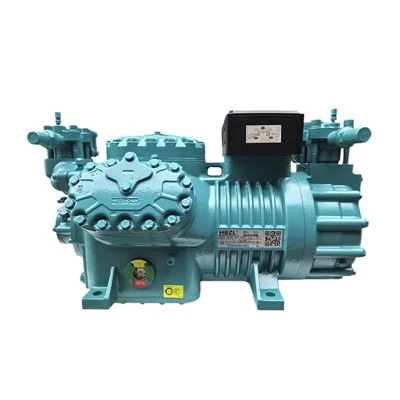
The working principle of refrigeration is as follows: the compressor compresses low-pressure vapor into high-pressure vapor, reducing the vapor's volume and increasing its pressure. The compressor draws in low-pressure working fluid vapor from the evaporator, increases its pressure, and sends it to the condenser. In the condenser, it condenses into a high-pressure liquid. After being throttled by a throttling valve, it becomes a low-pressure liquid and is sent to the evaporator. In the evaporator, it absorbs heat and evaporates, becoming low-pressure vapor again, which is then sent back to the compressor inlet, thus completing the refrigeration cycle.
The evaporator is a crucial component of the four main refrigeration units. Low-temperature condensed gas passes through the evaporator, exchanging heat with the outside air, vaporizing and absorbing heat to achieve the cooling effect.
The evaporator consists of two parts: a heating chamber and an evaporation chamber. The heating chamber provides the heat required for evaporation to the liquid, causing it to boil and vaporize; the evaporation chamber completely separates the gas and liquid phases. The vapor generated in the heating chamber carries a large amount of liquid droplets. Upon entering the larger evaporation chamber, these liquid droplets are separated from the vapor through self-condensation or the action of a demister. Typically, the demister is located at the top of the evaporation chamber.
Evaporators are classified into three types according to operating pressure: atmospheric pressure, pressurized, and depressurized. They are also classified according to the movement of the solution within the evaporator: ① Circulating type: The boiling solution passes through the heating surface multiple times in the heating chamber, such as central circulation tube type, suspended basket type, external heating type, Levin type, and forced circulation type. ② Single-pass type: The boiling solution passes through the heating surface once in the heating chamber without circulation, and the concentrate is discharged immediately, such as rising film type, falling film type, stirred thin film type, and centrifugal thin film type. ③ Direct contact type: The heating medium directly contacts the solution for heat transfer, such as submerged combustion evaporators. Evaporation devices consume a large amount of heating steam during operation. To save heating steam, multi-effect evaporators and vapor recompression evaporators can be used. Five-ring refrigeration shell-and-tube evaporators are widely used in chemical, light industry, and petroleum sectors.